
AI-NAV · Article
What Alipay AI Pay Is, and When It Helps AI Creators Get Paid
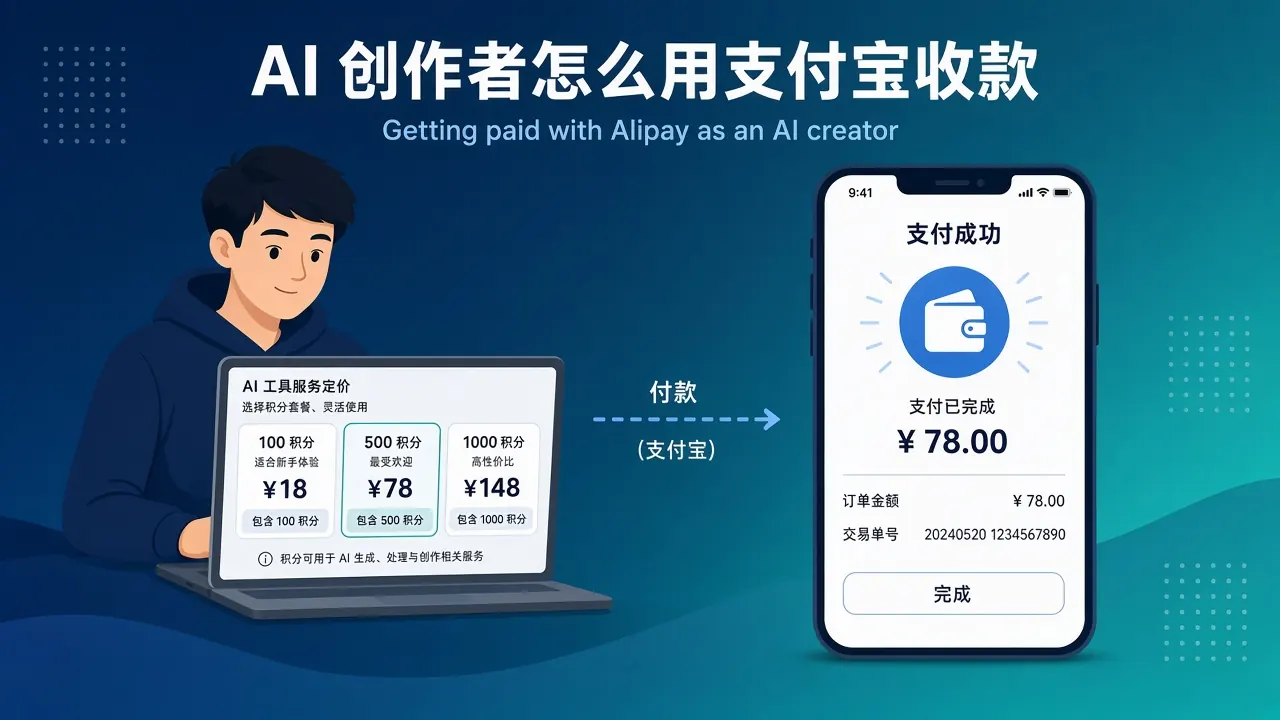
Checked on 28 November 2026 (Asia/Shanghai). Product names, fees, settlement rules and restrictions below come from Alipay’s public documentation. Alipay can change them; confirm the figures on the signing page and in your agreement before you go live. This is a practical note for AI creators, not an advertisement, and not legal or tax advice.
If you sell an AI writing tool, an image generator, a small utility or an API, the hard part is often not the product. It is getting paid by users in mainland China who expect to pay with Alipay. “Alipay AI payment” is not a single switch. The official name is Alipay AI Pay (支付宝 AI 付), at aipay.alipay.com, and it is a family of products. Pick the wrong one, and you can end up reading enterprise subscription rules for a personal web app.
1. What the official product actually is
Alipay’s AI payments overview describes an open platform for AI apps, creators, Skill and API providers, model and cloud vendors, and agent or device ecosystems. It covers app checkout, Skill monetisation, usage-based API billing, model subscriptions and agent-delegated payments, on top of Alipay’s existing acquiring, risk and fund-safety systems.
There are five official product lines. Creators should match the product to what they sell:
- Vibe Pay (AI app checkout) is for charging for features, content, credits, usage packs or a period of access in a web or mobile app. This is the first product most tool builders should look at. You can take only the payment primitives (pay, query, refund) and run your own orders and entitlements, or use the Smart Checkout Suite, which adds product, order and entitlement management. The docs say eligible individual creators can collect as individuals.
- Machine Pay (usage-based billing) charges per API call, MCP tool, digital content or compute. On the open platform, the same HTTP 402 flow is also documented as “AI收” (AI Collect).
- Skill Pay charges when someone uses a Skill that an agent can call. The marketing site describes a buyout that delivers the Skill source, and a period licence that grants use for the current term only, without delivering the source and without auto-renewal.
- Token Pay (recurring AI subscriptions) is for selling tokens, model quota or auto-renewing plans. Official eligibility is limited to Alipay enterprise accounts and listed merchant categories. It is aimed at model and cloud vendors, not at every indie app.
- Agent Pay lets an agent place an order and pay within a user’s authorisation, then return the receipt. That is “pay on the user’s behalf,” not “collect for your own product.” Mobile and new-device Agent Pay are currently invitation-only or enterprise programmes, so they are usually not the first path for a solo creator.
The “AI Wallet” feature that users can search for in the Alipay app is a consumer tool for managing agent authorisations and bills. It is not a merchant collection product.
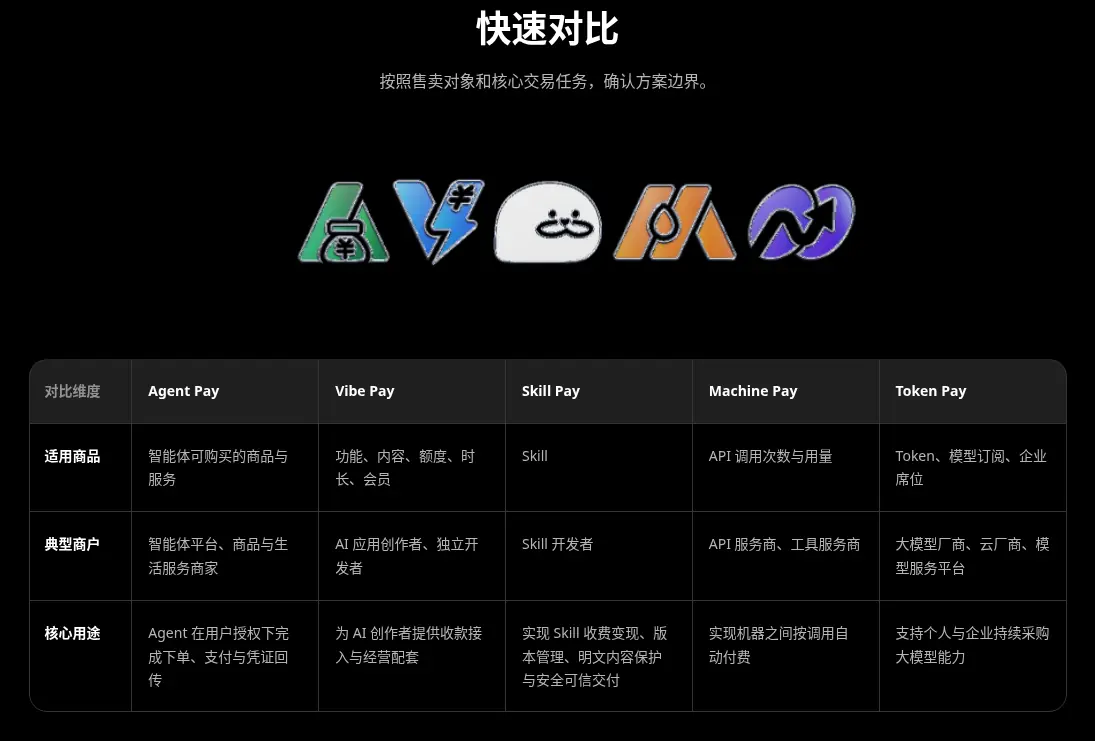
Figure 1: The “quick comparison” table on the Alipay AI Pay homepage, listing Agent Pay, Vibe Pay, Skill Pay, Machine Pay and Token Pay. Screenshot taken on 28 November 2026.
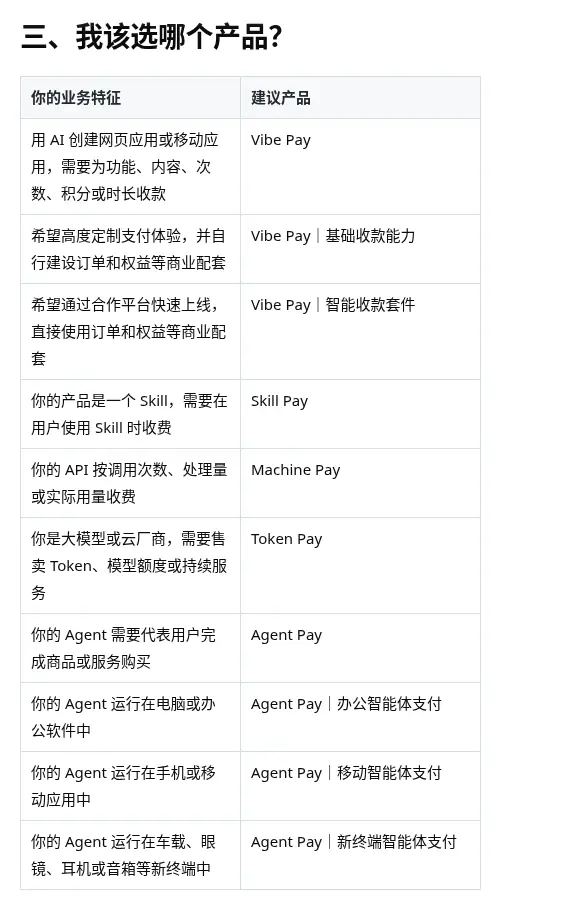
Figure 2: The “Which product should I choose?” table in the official overview, matching business features to a product line.
2. When it is a good fit, and when it is not
It is a reasonable option when most of your paying users are in mainland China and already use Alipay; when you have a web or mobile app and want to sell a one-off licence, a count pack, a credit pack or a fixed-term pass; when you want to try paid features on a partner creation platform, or can integrate a payment API yourself; or when you offer an API that agents can call, you want to charge per use, each charge is at most 50 yuan, and the currency is CNY.
It is a weaker fit, or the wrong product, in these cases:
- You need automatic recurring billing. The suite’s duration packs are billed as one week, one month, one quarter or one year. Official pages say that is not the same as auto-renewal, and the integration scope does not include auto-renewal. Recurring subscriptions belong to Token Pay, which currently requires an enterprise account.
- Your users are mainly overseas and need to pay with international cards. The usage-based billing docs allow CNY only. The public pages for the Smart Checkout Suite and Alipay’s computer-website payment product do not list international cards. For collecting from overseas customers, see the existing guide on getting paid globally without a company.
- You resell subscriptions, quota or APIs for overseas AI models. The Jike Shou (即刻收) rules disallow topping up, reselling or distributing those products.
- You sell accounts, redeem codes, unofficial top-ups or informal membership transfers. Those are also outside the supported categories.
- You only want your agent to buy someone else’s goods for the user. That is Agent Pay, not app checkout.
3. How to get started
Start by matching your product to the official matrix: app entitlements, a Skill, metered API calls, or auto-renewing subscriptions. Technical integration can run in parallel with merchant onboarding. Alipay recommends finishing tests in the sandbox, which does not move real funds.
If you have a web or mobile app, start with Vibe Pay. The Smart Checkout Suite accepts Alipay personal accounts and enterprise accounts. You can either go through a partner platform, or apply to integrate your own app directly. Direct integration is currently opened by invitation: you apply, and you can proceed only after you are approved and added to a whitelist. The official intro lists Lingguang (灵光), Guancha (观猹), WeaveFox and QMuse as partner platforms; the Vibe Pay product page also names Tanjiquan (碳基圈) and Step Studio. Whether a given platform is available for your app depends on that platform’s current rules.
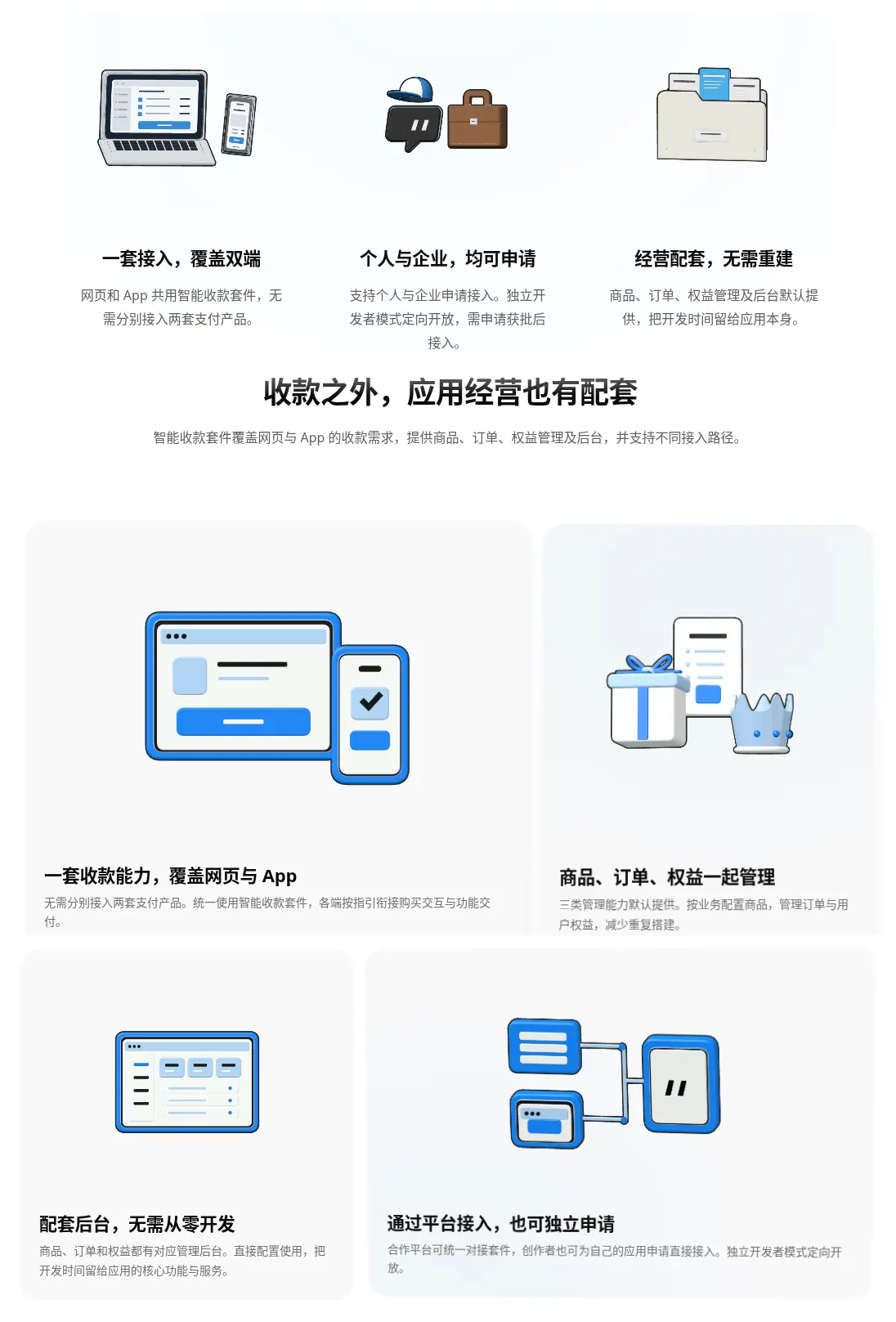
Figure 3: The Vibe Pay product page states that individuals and enterprises can apply, and describes the Smart Checkout Suite. Direct integration for independent developers is currently invitation-only.
On a partner platform, the public flow is: create or list your app, configure when users are asked to pay and what they buy, scan or open a configuration link to set prices in Jike Shou and complete authorisation, then put the pay entry at a real action such as “generate” or “export.” After the user returns, do not treat the redirect as proof of entitlement; query the suite for access or remaining quota before you unlock the feature. Each product uses one billing mode, with optional price tiers. Count and credit packs can be topped up and stacked; a duration pack cannot be renewed under that mode while it is still valid.
If you already have your own catalogue, orders and entitlements, use the basic payment capability and attach the matching Alipay product for web or app. The official shortcut is to install the Alipay AI Pay skill and let a local agent help with website payment, sandbox testing and signing:
npx -y @alipay/alipay-aipay@latest install
If you sell an API or MCP tool, use Machine Pay (AI收). Supported account types are Alipay enterprise accounts, personal accounts and individual businesses. When a user or agent requests a paid resource, you create a pre-order and return HTTP 402 Payment Required with the pre-order id in the response headers. After the user pays, the agent retries with a Payment-Proof; you verify it, check the amount and order number, and only then return the content. Each API charge cannot exceed 50 yuan, and the currency must be CNY. The public product contact is alipay.ai@service.alipay.com.
Some signing, key-configuration and production-verification steps are only visible after you log in to the merchant platform. The steps above follow public docs only; use the fields and prompts you see after sign-in.
4. Fees and settlement (checked 28 November 2026)
The Smart Checkout Suite combines two charges, according to the product intro updated on 21 November 2026: JSAPI payments at 0.6%–1%, which varies by industry and by your signed rate, plus 0.4% for Jike Shou product operations. Funds go to the Alipay balance of the signed account and are usually available in real time. If this is your first acquiring product and you have been signed for fewer than 90 days, or you have not traded on 30 consecutive days, settlement moves to the next day. That intro does not list a separate refund window for the suite; use the signed agreement for refunds.
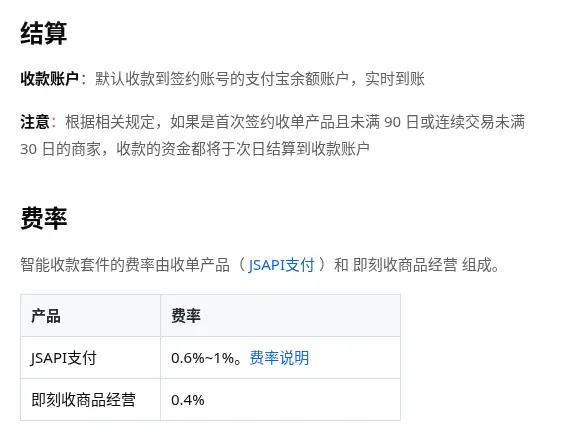
Figure 4: The suite intro’s settlement and fee section: JSAPI payments at 0.6%–1%, plus 0.4% for Jike Shou product operations, with funds usually settling in real time to the signed Alipay balance.
If you use computer-website payment, a common option under basic checkout, the official product page states a 0.6% fee per transaction. Enterprise, personal and individual-business accounts can apply. Personal applicants can submit a business licence to raise collection limits; an unfinished website or incomplete materials can reduce limits and shorten how long the product stays available. Refunds are allowed for 12 months after the payment, and the money goes back to the original method, but the fee is not returned. Settlement follows the same real-time rule, with next-day settlement for new or inactive merchants.
Mobile-website payment is 0.6% in ordinary industries and 1.0% in special industries, including casual games, game point cards and game-channel agency. The refund window is also 12 months, and the service fee is not returned on refund. Settlement is the same as above.
Machine Pay / AI收 is documented on the open platform at 1.0% per transaction, rounded to the nearest fen. The worked examples are: a 4 yuan order incurs 0.04 yuan and settles 3.96 yuan; a 4.5 yuan order has a calculated fee of 0.045 yuan, a charged fee of 0.05 yuan, and a settlement of 4.45 yuan. For individual developers, a zero-fee promotion runs from 15 April 2026 to 31 December 2026, and the page says actual charges follow the bill. Settlement is real time to the signed Alipay balance, with the same 90-day / 30-day next-day exception. Refunds are allowed for 12 months, and the service fee is returned to the merchant with the refund.
Token Pay does not publish one rate for every merchant. It bills at the signed rate of the underlying product, such as merchant auto-debit, app payment or computer-website payment, which you can check under contract management on the merchant platform. The settlement period is sent by site message or email after approval; funds are held during that period and the schedule can change with the merchant’s operating record. New subscription customers are capped at 5,000, with a separate request needed to raise the cap. Trial periods are limited to invited merchants. A discounted price may not go below one third of the regular price.
Skill Pay’s public site says proceeds enter the developer’s Alipay account as soon as the sale completes. As of this review, public pages do not publish a standard fee, and the old Skill Pay doc URLs now redirect to the overview. Who can apply, and on what terms, has to come from the agreement you see after login. This article does not infer a rate.
5. Limits you should know before you apply
First, zero fees are not a platform-wide, open-ended offer. The published promotion applies to usage-based billing for individual developers until 31 December 2026, and the bill is authoritative. Do not price a web or app checkout as if it were free.
Second, being able to apply for Vibe Pay or usage-based billing as an individual does not mean you can open Token Pay. The subscription docs require an enterprise account and listed categories.
Third, direct access to the Smart Checkout Suite needs a whitelist approval. Official product copy says that on a partner platform, user payments go to the creator’s receiving account and do not pass through the platform’s account.
Fourth, Jike Shou restricts what you can sell. For AI creators, the relevant rules include: no trading of internet or game accounts, ready-made accounts or redeem codes, and no unofficial or cross-region membership top-ups; no topping up, reselling or distributing overseas AI models or their subscriptions, quota or APIs; domestic generative or synthetic AI services must submit the qualifications and content-labelling plan the rules require, and third-party models also need upstream authorisation; forging someone else’s likeness or voice, including deepfakes, is not allowed. Category decisions follow what you actually sell. Doing the same business with AI does not change the category.
Fifth, a front-end redirect is not proof of payment. Computer-website payment and similar docs require you to trust the asynchronous notification or a query result, verify the signature, and check the order number and amount. The same notification can be sent more than once, so entitlements should be granted idempotently.
6. FAQ
Are “Alipay AI payment,” “AI Pay” and “AI Collect” the same thing?
Not exactly. People often use “Alipay AI payment” for the whole Alipay AI Pay platform. AI Pay is the umbrella. AI收, in the open-platform docs, is usage-based billing (Machine Pay). Agent Pay is the product that lets an agent pay for a user. If you are collecting for your own tool, start with Vibe Pay or usage-based billing, not the invitation-only Agent Pay path.
Can I collect without a company?
It depends on the product. Public docs for the Vibe Pay suite and for usage-based billing include Alipay personal accounts. Token Pay currently requires an enterprise account. Personal applicants for computer-website payment can submit a business licence to raise limits, and incomplete materials can reduce limits or shorten availability. Direct suite access still needs invitation review.
What is the fee? Is it free now?
It is not uniformly free. The suite is JSAPI at 0.6%–1% plus 0.4% for Jike Shou. Computer-website payment is published at 0.6%. Usage-based billing is 1.0%, with a zero-fee promotion for individual developers from 15 April 2026 to 31 December 2026, subject to the bill. Skill Pay and Token Pay have no single public rate that applies to everyone.
When is the money available?
For the suite, usage-based billing and computer-website payment, public rules say funds go to your Alipay balance, usually in real time, or the next day if you have been signed for fewer than 90 days or have not traded on 30 consecutive days. Token Pay’s schedule is notified separately, and funds are held during the control period.
Can I sell count packs for an AI image or writing tool?
Vibe Pay is the product to evaluate. The suite officially supports count packs, credit packs, duration packs and buyouts, and official pages use image-generation examples. If the service is domestic generative or synthetic AI, prepare the qualifications the Jike Shou rules ask for. If you are actually reselling an overseas model API, that is not a supported category.
Can I take international cards from overseas users?
In the public docs checked for this article, usage-based billing supports CNY only, and the suite and computer-website payment pages do not list international cards. If most of your users are overseas, look at a cross-border option separately.
Do I have to incorporate first?
Not for every product. Personal accounts can apply for the suite and for usage-based billing. Whether you later need a company for invoicing or business customers is a separate question. If you need auto-renewing subscriptions, the current docs still point to an enterprise account.
7. Closing
If your users pay with Alipay, and you are selling your own app features or metered API calls, Alipay AI Pay is worth reading carefully, especially Vibe Pay and usage-based billing. It is a way for creators in China to collect from Alipay users, not a single answer to every monetisation problem. Auto-renewal, enterprise subscriptions, overseas-model resale and international-card checkout need a different path, or a clear look at the limits first. Fees and eligibility follow the agreement on the day you sign. This article only records rules that could still be checked in public official documents on 28 November 2026.