
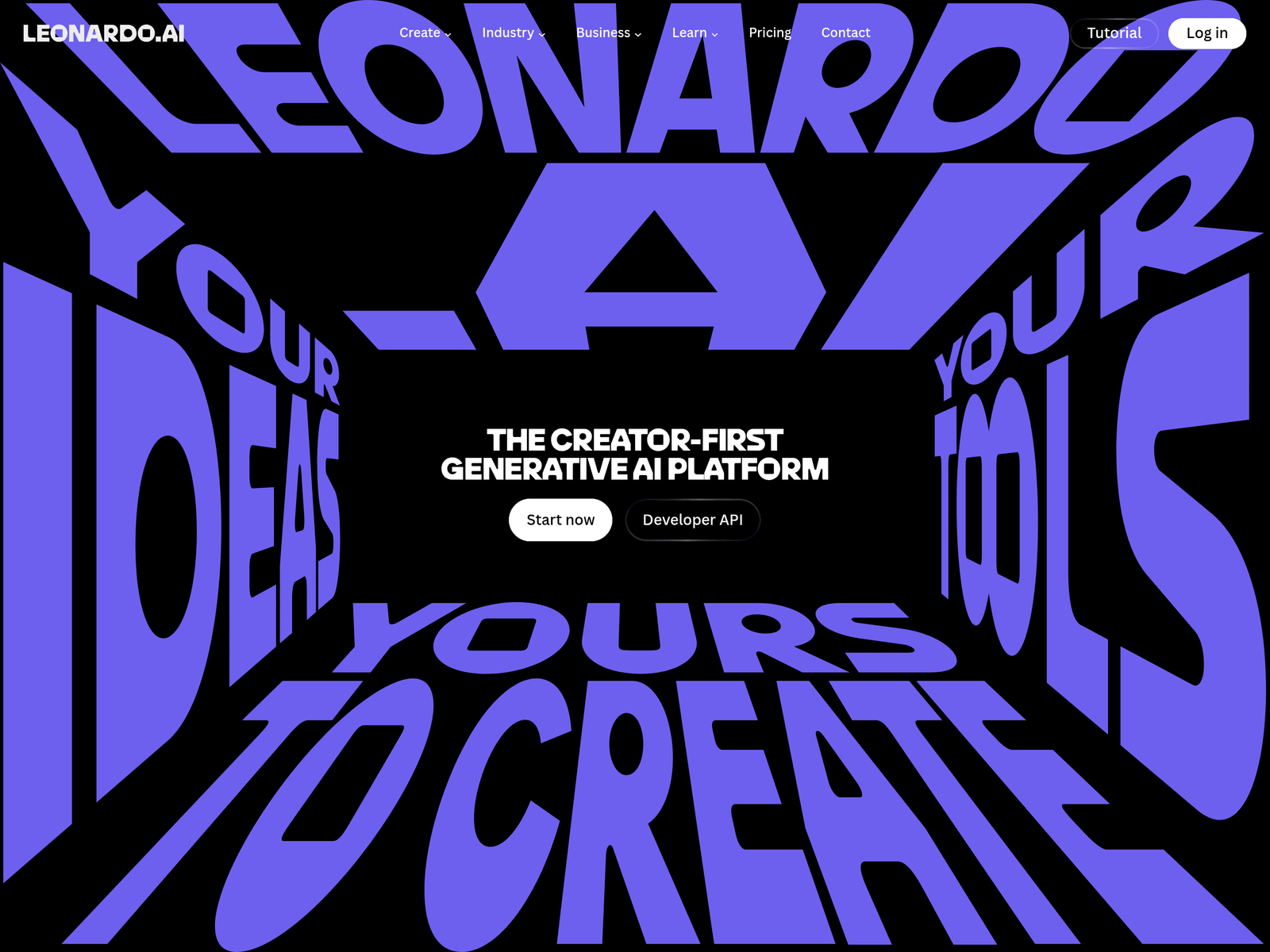
Overview
- Tool name: Leonardo.Ai
- Developer: Leonardo Interactive
- Official website: https://leonardo.ai/
- Category: AI Image Tools
Leonardo.Ai is an AI image generation platform for game and creative teams. It creates visuals from prompts or custom models and supports animation, precise editing, and resolution enhancement. The platform helps turn static concepts into production-ready image and video assets.
Key Uses
- Generate images from prompts: Users can create high-quality visuals from simple text prompts, making it easier to explore concepts, styles, and early creative directions.
- Create with custom models: The platform supports custom models, allowing outputs to align more closely with a specific aesthetic, project style, or brand visual direction.
- Turn static visuals into motion: AI-driven animation and motion tools can convert still images into dynamic video content for storytelling, social media, and product experiences.
- Edit images and video with precision: Editing can preserve important elements such as characters, composition, style, and intent, helping users refine work without starting over.
- Increase resolution and clarity: The platform can boost quality at different sizes, preparing assets for print, high-resolution displays, and professional delivery.
- Support multiple creative roles: The website lists artists, designers, animators, photographers, marketers, and developers as intended users, covering workflows from concept art to content production.
Who It Is For
- Game art and concept teams: Game studios can use Leonardo.Ai to generate characters, environments, props, and stylized concept art before refining assets in a production pipeline.
- Marketing and brand teams: Marketers can produce product visuals, social content, campaign imagery, and style explorations without beginning every asset from scratch.
- Designers and animators: Design professionals and animators can test composition, color, character styling, and visual direction during pre-production or early ideation.
- Developers building creative products: The site includes a Developer API entry point, indicating that developers may integrate image generation capabilities into their own products or workflows.
- Teams preparing high-resolution deliverables: Users who need assets for print, high-resolution screens, or client-facing delivery can use resolution enhancement to improve clarity after the composition is approved.
Tips for Best Results
- Start with clear prompt structure: Describe the subject, style, lighting, composition, and background before adding more constraints. This helps the model produce a usable starting point faster.
- Match the model path to the project: For brand-specific or style-specific work, explore custom models. For quick exploration, begin with standard prompt-based generation before committing to a direction.
- Use editing instead of regenerating: When the character, layout, or overall style is already close to the target, use precise editing tools to adjust selected elements rather than creating a new image from scratch.
- Upscale after finalizing composition: Apply resolution enhancement near the end of the workflow, especially when the asset is intended for print, high-resolution displays, or professional delivery.
- Separate exploration from final output: Generate multiple directions during early ideation, then lock the style, model, and editing steps before producing final assets to reduce variation.
Limitations
- Results depend on prompts and settings: Output quality can vary based on prompt wording, style choices, and model selection. Complex requests may require several rounds of iteration.
- Homepage claims need verification in product pages: The site includes promotional language for creators and brands. Specific feature availability, account access, and technical limits should be confirmed in the live product or official documentation.
- Professional use requires human review: For commercial projects, brand materials, or client delivery, generated assets should be reviewed for character consistency, composition, detail accuracy, and rights compliance.
- API details require further confirmation: Although a Developer API entry point appears on the homepage, integration scope, quotas, pricing, and technical requirements should be checked in official developer resources.
Frequently Asked Questions
How do I start using Leonardo.Ai?
The homepage provides a Start now option for entering the creation experience. Users can begin by generating images from prompts, then explore editing, motion, and upscaling tools as their workflow develops.
Who is Leonardo.Ai designed for?
The platform lists artists, designers, animators, photographers, marketers, and developers among its intended users. It is mainly aimed at creative and game-related workflows that need image generation, motion, editing, and asset enhancement.
Can Leonardo.Ai create video content?
Yes. The platform describes tools for turning static ideas into dynamic video content using AI-driven animation and motion features. These are positioned for storytelling, social content, and product experiences.
Does Leonardo.Ai offer an API?
The homepage includes a Developer API entry point, suggesting that developer access is part of the platform. Exact API capabilities, terms, and availability should be confirmed through official developer documentation.
What makes Leonardo.Ai different from general AI image tools?
Its positioning emphasizes game and creative industry workflows, including custom models, motion generation, precise editing, and resolution enhancement. This makes it more workflow-oriented than tools focused only on single-image generation.