
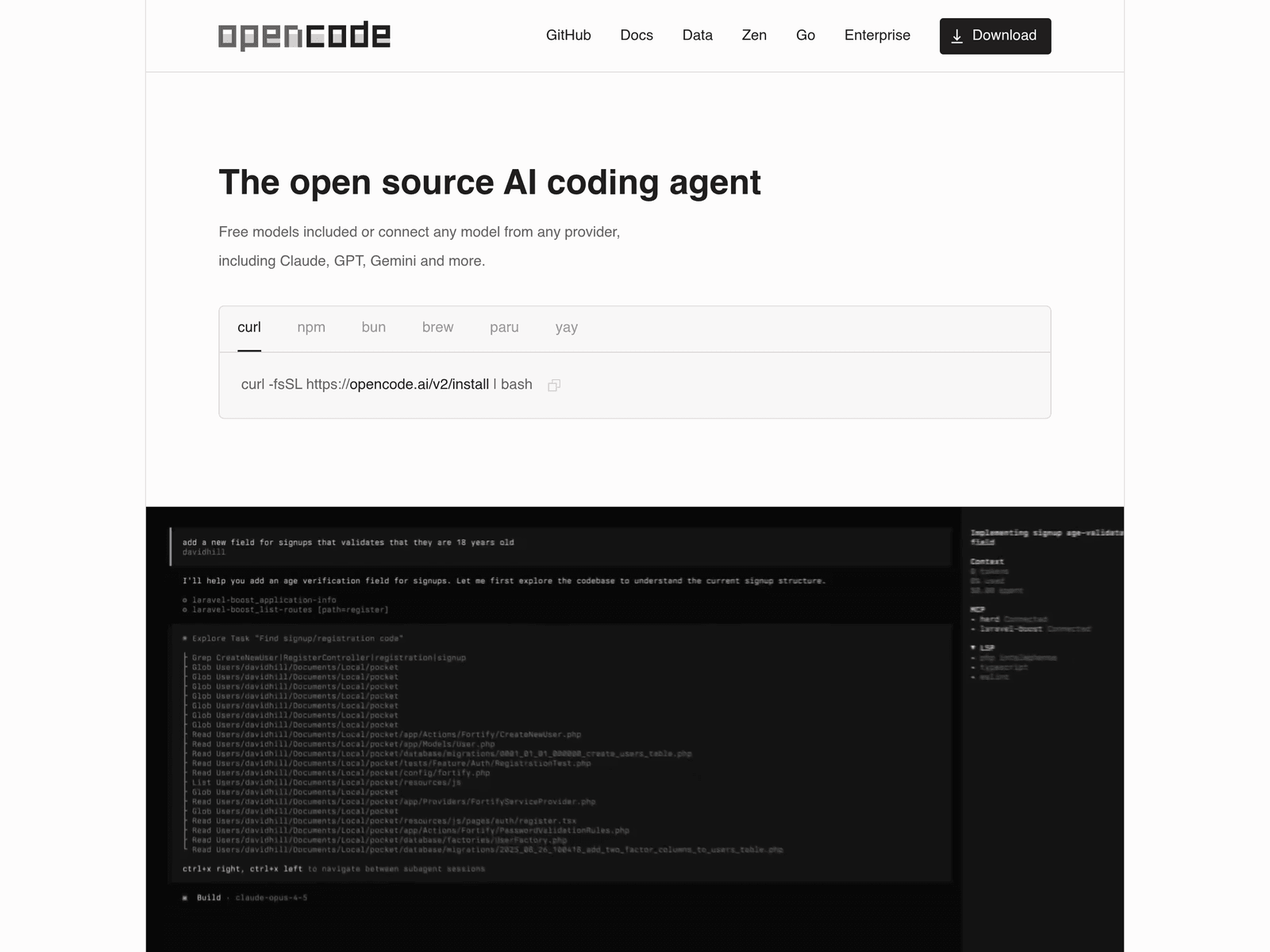
Overview
- Tool name: OpenCode
- Official website: https://opencode.ai/
- Category: AI Programming Tool / AI Coding
OpenCode is an open-source AI programming tool designed to serve as an alternative option for developers seeking open coding assistants. It aims to help users write, refactor, and debug code more efficiently through AI-driven capabilities.
Key Uses
- Code Generation: Generates code snippets or functions based on natural language descriptions and context.
- Code Refactoring: Analyzes existing code logic to suggest improvements and structural cleanups.
- Debugging Assistance: Helps identify potential errors in code and proposes corrective solutions.
Who It Is For
- Software Developers: Professionals looking for open-source coding assistants to integrate into their daily workflows.
- Open Source Enthusiasts: Individuals and teams who prefer transparent, community-driven development tools.
- Learners and Explorers: Developers exploring new programming languages or unfamiliar codebases.
Tips for Best Results
- Provide Clear Context: Supply precise requirements and relevant code snippets to help the AI generate more accurate and useful suggestions.
- Review Generated Code: Always perform manual code reviews and testing on AI-generated outputs before incorporating them into production environments.
Limitations
- Model Dependency: The quality of assistance relies heavily on the underlying large language models configured for the tool.
- Complex Codebase Handling: May face limitations in comprehending extremely large or deeply nested proprietary projects.
Frequently Asked Questions
Is OpenCode fully open source?
OpenCode is positioned as an open-source AI programming tool. Users can check its official repository and licensing details directly through its website.
How can I start using OpenCode?
You can visit the official website at https://opencode.ai/ to find installation instructions, configuration guides, and setup documentation.
Which programming languages are supported?
Supported languages generally include mainstream options such as Python, JavaScript, and TypeScript, depending on the underlying model configurations.